
A Difficult Night at the Table and the Hard Questions We Must Face Together
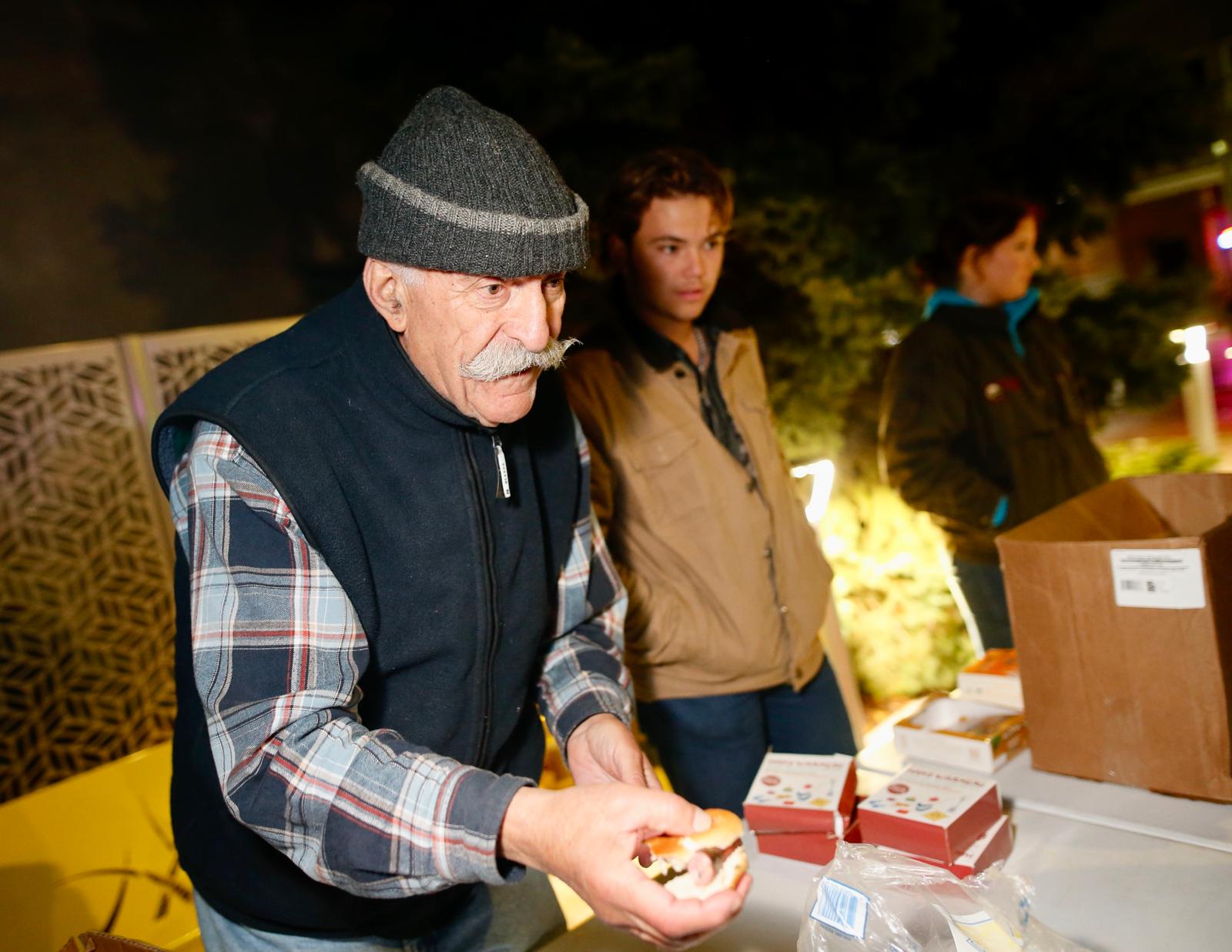
Last Thursday in St. Catharines was one of the most challenging evenings we have ever experienced at the Neighbors Table. What began as a routine night of serving quickly became a sobering reminder of just how complex the homelessness crisis has become — and how deeply it affects every part of our community.
Within a single hour, we saw police searching the area for a person of interest. Across the street, someone in visible crisis — heavily intoxicated, overwhelmed, and desperate for warmth — attempted to start a fire beside a building. Fire services arrived. Police returned. Then emergency medical responders. At nearly the same time, one of our own guests collapsed on the sidewalk and required immediate EMS assistance.
Tensions rose between guests. Fear and frustration grew among bystanders. And through all of it, our volunteers — teenagers, parents, seniors, and friends — did their best to remain calm, compassionate, and grounded while navigating an environment that felt increasingly unpredictable.
The Concerns of Our Neighbors
In the midst of everything, we were approached by a local business owner who expressed deep concern. From his perspective, our weekly gathering is drawing people into the area who then spill onto his property, linger in common spaces, and impact his livelihood.
His frustration is understandable.
He has worked hard for what he has.
And the reality is that homelessness affects him too.
This isn’t an “us vs. them” issue.
This is a community issue.
And it raised the recurring question many of us ask quietly:
Are we truly helping… or are we unintentionally enabling?
The truth is complicated.
The crisis is not improving.
It is growing — and with it grows the pressure on:
- volunteers,
- guests,
- local businesses,
- first responders,
- city staff,
- and every resident who shares these streets.
Our mayor is working hard to address these concerns, but he is facing significant challenges at the regional level. The winter compounds the struggle. And despite our willingness — including offering to clean not only our own area but the surrounding properties — sometimes even that is not enough to ease the tension.
A Word of Gratitude to First Responders
In the middle of the chaos, one thing stood out clearly:
our first responders are carrying a tremendous burden.
We are incredibly thankful for:
- the police officers who answer these calls day in and day out,
- the paramedics who respond without hesitation,
- the firefighters who step into dangerous situations with steady hands.
They deal with these crises constantly — and they do it within a legal framework that often ties their hands, limiting what they can do, pushing problems from one area to another rather than addressing root causes.
None of that is their fault.
They are doing the best they can within the tools they’ve been given.
We see their frustration.
We respect their work.
And we are grateful for their presence, professionalism, and patience in situations that very few people truly understand.
The Tension Between Duty and Impact
As a ministry, we sit in the difficult space between three very real responsibilities:
- Our Christian calling to serve and show compassion.
- Our desire to be good neighbors who respect and support nearby businesses.
- Our civic responsibility to contribute to solutions, not increase burdens.
These values don’t always align neatly.
Kindness alone cannot untangle the complexities of addiction, trauma, untreated mental illness, and systemic failures.
There are no easy answers.
These are big problems, far beyond the reach of any one ministry, business, or city department.
And sometimes, like last Thursday, we go home feeling unsure, heavy-hearted, and painfully aware of our limitations.
Where Do We Go From Here?
We don’t claim to have the solutions.
We cannot resolve homelessness on our own.
We are one small part of a much larger, more complicated challenge.
But we can:
- Continue to show up for those who have no one else.
- Treat our neighbors — housed and unhoused — with dignity.
- Listen carefully to business owners and property managers.
- Work with the City and Region as partners, not critics.
- Serve responsibly, thoughtfully, and prayerfully.
And most importantly, we can pray — not as a last resort, but as our first step.
Prayer brings clarity.
Prayer softens hearts.
Prayer opens doors.
Prayer reminds us that while we see only a small piece of the crisis, God sees the full picture.
A Call for Guidance and Unity
We ask everyone to join us in prayer:
- for direction,
- for wisdom,
- for protection of volunteers,
- for the wellbeing of first responders and local businesses,
- for meaningful collaboration with stakeholders,
- for compassion without chaos,
- and for sustainable solutions rooted in dignity and peace.
This crisis is not something one group can solve.
It is something we must face together — churches, businesses, residents, first responders, community organizations, and government.
We will continue to show up.
We will continue to listen.
We will continue to care.
And we will continue trusting in the Lord, who sees beyond our limitations and leads us one difficult step at a time.

Leave a Reply